

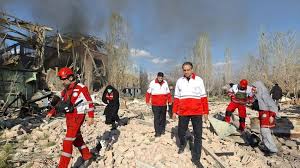
Nearly two months have passed since the United States and Israel initiated military operations against Iran, yet the conflict has evolved in ways that neither side appears to have fully anticipated. Observations gathered from individuals inside Iran, including critics of the Tehran regime, reveal that the confrontation has moved far beyond conventional military engagement. Increasingly, the conflict has centered on civilian infrastructure, a shift with consequences that extend well beyond immediate physical destruction.
The destruction of bridges, railways, energy facilities, and industrial centers is not merely a tactical military development. It also shapes public perception, national identity, and collective memory. In a country whose modern history has been deeply influenced by war, sanctions, and foreign intervention, attacks on infrastructure revive longstanding narratives about external threats. These perceptions can strengthen national solidarity, reduce internal political divisions, and complicate future diplomatic engagement between Iran and the West.
The Expansion of the Conflict Beyond Military Targets
During the January 2026 protests, Donald Trump publicly told the Iranian people that “help is on its way.” For many observers, this statement suggested that military intervention was already being considered under the justification of supporting the Iranian population. Forty-six days later, on February 28, military strikes began.
As the conflict intensified, civilian infrastructure increasingly became a central target. Reports identified attacks on bridges, railway systems, airports, petrochemical complexes, steel factories, and energy facilities. Among the most notable incidents was the strike on the B1 Bridge in Karaj, regarded as a major engineering project that had not yet officially opened. Another major target was the Mahshahr petrochemical complex, one of the largest in the Middle East. The South Pars gas field, the backbone of Iran’s energy sector and the world’s largest natural gas reserve, was also reportedly attacked.
These developments coincided with repeated warnings from Trump regarding the destruction of Iranian infrastructure. Israeli officials similarly indicated that further strikes on energy facilities would depend on American approval, while Prime Minister Benjamin Netanyahu openly acknowledged the targeting of Iran’s petrochemical sector.
Infrastructure Warfare in Historical Perspective
Targeting infrastructure during war is not a new phenomenon. History provides numerous examples, including Allied bombing campaigns against Germany and Japan during World War II, Iraqi attacks on Iranian oil facilities during the Iran–Iraq War, U.S.-led strikes on Iraq’s electrical grid during the 1991 Gulf War, NATO’s bombing campaign in Serbia in 1999, and Russian cyberattacks on Ukraine’s energy systems in 2015.
What distinguishes modern warfare, however, is the precision and strategic centrality of infrastructure targeting. Rather than focusing solely on military capability, contemporary conflicts increasingly seek to pressure societies directly. The objective is often psychological and political: weaken civilian resilience, intensify public dissatisfaction, and force governments into strategic concessions.
Both the United States and Israel have justified these attacks by arguing that they ultimately serve the interests of the Iranian people. Yet this claim remains deeply contested inside Iran, where many citizens view infrastructure attacks as collective punishment rather than liberation.
Does Infrastructure Destruction Weaken the State?
Supporters of the strategy argue that attacks on energy production and industrial facilities reduce state revenues, weaken economic stability, and increase domestic dissatisfaction with the ruling establishment. Israeli officials, for example, claimed that strikes on South Pars pipelines aimed to undermine the Iranian government’s financial capacity. Reports suggested that the attacks disrupted approximately 12 percent of Iran’s gas production and significantly reduced petrochemical export operations worth billions of dollars annually.
Despite these economic consequences, there is little evidence that infrastructure destruction necessarily produces regime collapse. Experiences in Gaza, Yemen, and Lebanon suggest the opposite. Hamas, Hezbollah, and the Houthis have all endured extensive external pressure without surrendering political authority.
Instead, such attacks often generate a “rally-around-the-flag” effect. External pressure can strengthen national identity and increase public solidarity against foreign actors, particularly among politically undecided citizens. Ideological governments frequently use these moments to reinforce narratives of resistance and external hostility.
For the Islamic Republic, attacks on infrastructure may therefore serve an unintended political function. Rather than weakening state legitimacy, they can reinforce anti-Western discourse and reduce the divide between the government and segments of society that previously held ambivalent or critical views.
The Power of Narrative and Collective Memory
On April 7, Trump reportedly threatened the destruction of Iran’s civilization. Whether intended as political rhetoric or genuine warning, the statement reinforced longstanding Iranian fears regarding American intentions toward the country.
Within Iran, reactions across social media reflected growing anger and anxiety. Some citizens sarcastically questioned whether promises of restoring Iranian greatness actually meant returning the country to the “Stone Age.” Others participated in nighttime protests against threats directed at civilian infrastructure.
The psychological impact of these developments has been substantial. Ordinary Iranians increasingly fear power outages, fuel shortages, water crises, and disruptions to essential services. These experiences are not isolated incidents; they become part of a broader social narrative transmitted through media, political discourse, and personal memory.
The Iran–Iraq War left a profound imprint on Iranian society, particularly through attacks on cities and infrastructure. Similar experiences today risk reproducing long-term distrust toward external powers. Over time, repeated exposure to such events shapes collective memory and influences future political attitudes.
This process matters strategically. Public distrust toward foreign actors raises the political cost of diplomatic engagement and complicates any future alignment between Iran and Western powers. Governments seeking rapprochement may struggle to gain domestic legitimacy if collective memory remains dominated by perceptions of aggression and destruction.
Civilian Costs and Social Consequences
For ordinary citizens, the consequences of infrastructure warfare are immediate and deeply personal. Fuel shortages, electricity cuts, economic disruption, and insecurity directly affect daily life. Hospitals, schools, transportation systems, and businesses all become vulnerable.
The impact on children and families has been particularly severe. Reports from conflict-affected regions indicate rising psychological trauma among children, alongside fears regarding education and safety. Concerns intensified following the reported school incident in Minab during the opening phase of the war, where 165 female students were allegedly killed. Since then, many parents have hesitated to send their children to school, leading millions of students to continue their education online.
These experiences strengthen emotional and political narratives surrounding victimhood and external hostility. Governments can then use these narratives to reinforce legitimacy and mobilize support against perceived foreign enemies.
The Strategic Contradiction
A central contradiction lies at the heart of this conflict. U.S. officials frequently criticize the Iranian government for prioritizing military projects and regional proxy groups over domestic welfare. Figures such as Marco Rubio have argued that Iran devotes national resources to organizations like Hezbollah, Hamas, the Houthis, and Hashd al-Shaabi instead of improving living conditions for its own people.
Yet many Iranians now ask why external powers knowingly target infrastructure that primarily affects civilians if they also claim to support the population. From the public’s perspective, attacks on electricity networks, transportation systems, and industrial facilities can appear indistinguishable from collective punishment.
This creates a dangerous political outcome: the actions of external actors may unintentionally mirror the regime’s own disregard for civilian suffering. In doing so, they risk strengthening the exact narratives that sustain the government’s ideological legitimacy.
FAQS
What is infrastructure warfare?
Infrastructure warfare refers to military strategies that target civilian systems such as energy facilities, transportation networks, communication systems, bridges, and industrial centers in order to weaken a state economically and politically.
Why are infrastructure targets important in modern conflicts?
Modern militaries often view infrastructure as strategically valuable because disrupting electricity, transportation, and economic production can place pressure on governments and reduce operational capacity.
How can attacks on infrastructure affect civilians?
Such attacks can lead to fuel shortages, electricity outages, transportation disruptions, economic instability, and limited access to healthcare, education, and essential services.
What is the “rally-around-the-flag” effect?
The rally-around-the-flag effect occurs when external threats or attacks increase national unity and public support for a government, even among citizens who were previously critical of it.
Why is collective memory important in conflicts?
Collective memory shapes how societies remember wars, foreign interventions, and political events. These memories influence future public opinion, national identity, and diplomatic relations.
Has infrastructure warfare been used historically?
Yes. Examples include World War II bombing campaigns, attacks during the Iran–Iraq War, NATO’s bombing of Serbia, the Gulf War, and cyberattacks on Ukraine’s energy infrastructure.
Can infrastructure attacks lead to regime change?
Historical evidence suggests that infrastructure destruction alone rarely guarantees regime collapse. In many cases, governments adapt while populations experience increased nationalism and resistance.
How does this conflict affect future U.S.–Iran relations?
Attacks on civilian infrastructure may deepen distrust between Iranian society and Western powers, making future diplomatic engagement and strategic cooperation more politically difficult.
Conclusion
The targeting of infrastructure has become one of the defining features of modern warfare. Its significance extends far beyond military strategy because it directly shapes public psychology, political narratives, and collective memory. While infrastructure attacks may produce immediate economic and operational disruption, their long-term political consequences are far more uncertain.
In Iran, these attacks risk reinforcing anti-Western sentiment, strengthening national solidarity, and legitimizing state narratives centered on resistance and foreign hostility. Rather than weakening the political system, sustained pressure on civilian infrastructure may deepen societal cohesion against external actors and reduce the prospects for future diplomatic engagement.
The broader implications are equally significant. If infrastructure warfare continues to expand as a normalized strategy, future conflicts may increasingly target civilian life as a means of political coercion. Such a trajectory could deepen cycles of distrust, prolong instability, and make durable peace agreements more difficult to achieve.
Ultimately, the central question remains unresolved: can the destruction of infrastructure truly alter state behavior, or does it instead generate new forms of resistance and collective resilience? In the long term, the answer may determine not only the outcome of wars but also the political future of the societies forced to endure them.