

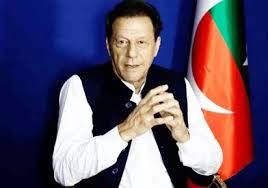
Opposition Leader in the National Assembly Mahmood Khan Achakzai on Friday issued a three-day ultimatum to the federal government regarding jailed former prime minister Imran Khan. He demanded clarity on two key issues: when a meeting with Imran Khan would take place and when the PTI founder would be allowed, with his family’s approval, to seek medical treatment of his choice.
Addressing the assembly, Achakzai stated that if the government failed to respond within three days, the opposition would no longer take responsibility for the functioning of parliament from Monday onward. He said he was making the request “in the softest possible words,” while emphasizing the seriousness of the opposition’s concerns.
The statement marks the latest in a long series of demands from the opposition, particularly the Pakistan Tehreek-e-Insaf, seeking relief for its founder, who has remained in Adiala Jail since August 2023.
Can the Ultimatum Create Real Pressure?
Political analysts remain divided on whether the opposition’s warning can create meaningful pressure on the government or whether it will remain largely symbolic.
Political commentator Ehtisham-ul-Haq believes such ultimatums are not new in Pakistan’s political landscape and historically have failed to produce significant political change. According to him, the opposition’s biggest challenge is the lack of effective public mobilisation.
He argues that repeated calls for mass gatherings and political pressure campaigns have not translated into large-scale public participation. Even directives issued to party workers and lawmakers have generated limited momentum, while sections of the public appear increasingly fatigued by confrontation-based politics.
In his view, these warnings mainly serve a symbolic purpose, allowing opposition leaders to remain politically visible while claiming they attempted resistance or negotiations. He also pointed out that efforts to establish dialogue with the establishment continue, although no major breakthrough has yet emerged.
Parliamentary Disruption vs Political Stability
Senior political analyst Hassan Askari Rizvi offered a different perspective, suggesting that parliamentary disruption may create political noise but is unlikely to place serious pressure on the executive branch.
He noted that the current political system is structured to absorb tensions through negotiation and political bargaining, especially when major coalition partners remain part of the governing arrangement. Rizvi warned, however, that repeated confrontational politics could have long-term consequences by normalising cycles of political retaliation whenever power changes hands.
PPP’s Role in the Political Equation
The role of Pakistan Peoples Party has also become a central topic in the debate. While the PPP has differences with the government over constitutional and fiscal matters, including concerns related to the proposed 28th Amendment, analysts believe these disagreements are unlikely to evolve into a united opposition alliance with PTI.
Ehtisham-ul-Haq maintains that the PPP remains a stabilising force within the political system and has little incentive to join PTI’s confrontational strategy. According to him, the party’s political interests remain tied to working within the existing parliamentary structure rather than supporting street-driven agitation.
Hassan Askari Rizvi similarly described the PPP as an important pillar of coalition-style governance, arguing that the party prefers institutional bargaining and gradual political gains over disruptive political movements. He added that even when tensions arise between the PPP and the government, they generally remain within negotiated limits rather than turning into a complete political rupture.
Regional Concerns and Broader Political Context
The broader political discussion has also included regional security developments, particularly the ongoing conflict involving Iran and concerns over the possible closure of the Strait of Hormuz, a critical global oil shipping route. These international developments continue to add pressure to Pakistan’s already complex political and economic environment.
FAQS
Why did Mahmood Khan Achakzai issue a three-day ultimatum?
Mahmood Khan Achakzai demanded that the government clarify within three days when opposition leaders could meet Imran Khan and when he would be allowed medical treatment of his choice with family consent.
Where is Imran Khan currently being held?
Imran Khan has been detained in Adiala Jail since August 2023.
What is the opposition threatening if demands are not met?
The opposition warned that it may stop cooperating in the functioning of parliament if the government fails to respond to its demands.
Why do analysts consider the ultimatum symbolic?
Analysts argue that previous warnings and protest calls have failed to generate strong public mobilisation or meaningful political pressure on the government.
What role is the PPP playing in the current political situation?
The PPP is viewed as a stabilising coalition partner that prefers negotiation and institutional politics rather than joining PTI-led confrontation campaigns.
How could regional tensions affect Pakistan’s politics?
Concerns surrounding Iran and the Strait of Hormuz could increase economic and political pressure on Pakistan due to the region’s importance for global energy supplies.
Conclusion
The opposition’s latest ultimatum reflects continuing tensions between the government and PTI over the treatment and political future of Imran Khan. While the warning has generated political debate, analysts remain sceptical about its ability to force immediate concessions from the government, especially in the absence of large-scale public mobilisation or a united opposition front.
At the same time, the PPP’s role as a coalition stabiliser appears to reduce the chances of any major political realignment in the near future. However, experts caution that repeated political confrontations and parliamentary disruptions could deepen long-term instability and further polarise Pakistan’s political landscape.