

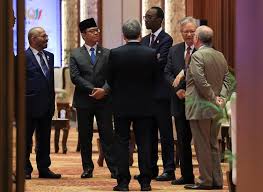
Iran’s Foreign Minister Abbas Araghchi has accused the United Arab Emirates of being directly involved in military operations against Iran during a Brics meeting held in New Delhi on Thursday, according to Iranian state media.
The diplomatic dispute escalated just one day after the UAE rejected claims made by Israeli Prime Minister Benjamin Netanyahu that he had visited the Gulf nation during the recent Iran conflict. In response, Araghchi warned that countries cooperating with Israel to create divisions in the region would eventually face consequences.
Speaking during the Brics gathering, Araghchi said he intentionally avoided naming the UAE in his official statement to preserve unity among member states. However, he later openly accused Abu Dhabi of supporting hostile actions against Iran. According to Iranian media, he claimed the UAE failed to condemn the attacks when they first began and may have played a more active role behind the scenes.
Araghchi also criticized the UAE’s security strategy, arguing that partnerships with the United States and Israel would not guarantee long-term stability. He urged Gulf nations to rethink their regional policies and focus on peaceful coexistence with neighboring countries.
In a separate message shared on Telegram, Araghchi repeated his accusations, describing the UAE as an “active partner” in the US-Israeli campaign against Iran. He additionally referenced reports of a supposed secret wartime meeting between Netanyahu and UAE President Mohammed bin Zayed Al Nahyan, despite Abu Dhabi denying that such a meeting ever took place.
The tensions intensified after a report published by The Wall Street Journal claimed that the UAE conducted military operations against Iran earlier this year. Iranian officials have since expressed concerns that disagreements between Tehran and Abu Dhabi could affect the outcome of the Brics foreign ministers’ summit, including the possibility of failing to issue a joint final statement.
Relations between Iran and the UAE have remained fragile since late February, when US-Israeli attacks reportedly triggered retaliatory strikes by Iran against Israel and its regional allies. Although a ceasefire has been in place since early April, both sides continue to exchange accusations over military involvement and regional security threats.
Iran has repeatedly accused Gulf countries of allowing US forces to launch attacks from their territories. Gulf states, including the UAE, have consistently denied these allegations, insisting they would not permit their land or airspace to be used for operations targeting Iran.
At the same time, the UAE recently blamed Iran for a drone strike on an energy facility in Fujairah, an accusation Tehran strongly denied. The ongoing exchange of claims highlights the deepening mistrust and rising geopolitical tensions across the Middle East.
FAQS
Who accused the UAE of involvement in attacks against Iran?
Iranian Foreign Minister Abbas Araghchi accused the UAE of supporting military operations against Iran.
Why are relations between Iran and the UAE tense?
Relations worsened following recent regional conflicts involving Iran, Israel, and US allies in the Gulf, alongside accusations of military cooperation and drone attacks.
Did the UAE admit involvement in attacks on Iran?
No, the UAE has denied the allegations and rejected claims of participating in military actions against Iran.
What role did Brics play in this dispute?
The accusations were made during a Brics foreign ministers’ meeting in New Delhi, where disagreements between Iran and the UAE reportedly created diplomatic tensions.
What did Iran say about Israel and the UAE?
Iran claimed the UAE cooperated with Israel during the conflict and accused it of failing to condemn attacks against Tehran.
Is there currently a ceasefire between Iran and its rivals?
Yes, reports indicate that a fragile ceasefire has been in place since early April, although political tensions remain high.
Conclusion
The latest accusations by Iran against the UAE underline the growing instability and diplomatic strain in the Middle East. As tensions between Iran, Israel, and Gulf nations continue to rise, regional cooperation appears increasingly fragile. While both Tehran and Abu Dhabi deny wrongdoing and defend their positions, the conflict has added pressure on international forums such as Brics and raised concerns about wider regional security. The situation remains highly sensitive, with future diplomatic efforts likely to play a crucial role in preventing further escalation.